Europe tightens crypto rules — how MiCA pushed Binance out of the EU
As the clock struck midnight on 1 July 2026, the EU's landmark MiCA regulation entered full force. For Binance, the world's largest crypto exchange, the deadline proved catastrophic. This is the inside story of a collapsed licensing gamble and the regulated alternatives that filled the void.

MiCA in action. The sweeping legislation mandated that any firm offering crypto services in the bloc must hold a license. — Photo by Thierry Monasse/Getty Images
As the clock struck midnight on 1 July 2026, the European Union's landmark Markets in Crypto-Assets regulation (MiCA) entered full force, permanently altering the crypto landscape for over 450 million citizens. The sweeping legislation, years in the making, mandated that any firm offering crypto-asset services within the bloc must hold a license as a Crypto-Asset Service Provider (CASP), or face immediate sanctions. With transition periods now exhausted, the era of offshore exchanges operating unchecked in Paris, Warsaw, or Rome had officially come to an end. For the world's largest crypto exchange, Binance, the deadline proved catastrophic, culminating in a swift and unceremonious retreat from the European market after a failed eleventh-hour bid for regulatory approval. Reuters investigations have pieced together the inside story of how Binance's gamble on a Greek licensing strategy collapsed, leaving European traders scrambling for alternatives just as a tightly regulated, AI-driven platform called Codate was quietly positioning itself to fill the void.
Exclusive: Reuters reveals why Binance failed to secure a MiCA license
Reuters exclusively reported on 16 June 2026 that Binance, led by founder Changpeng Zhao, was on the verge of having its MiCA license application rejected by Greek authorities, dealing a fatal blow to its European ambitions. The exchange had pinned its hopes on securing a CASP registration in Greece, which, under MiCA's passporting provisions, would have allowed it to operate across all 27 member states without seeking additional permissions. However, according to people familiar with the matter, the Greek regulator BaFin-equivalent Hellenic Capital Market Commission harboured deep concerns not about the completeness of Binance's paperwork, but about the "suitability and propriety" of its leadership. Zhao's controversial history, including a recent guilty plea in the United States to money laundering violations and Binance's record of multi-billion-dollar fines from global regulators, created an insurmountable reputational hurdle. The decision underscored a harsh new reality: under MiCA, a pristine regulatory past had become as critical as technical compliance, and for Binance, the ghosts of enforcement actions from Washington to London proved impossible to outrun.
In the days following Reuters' disclosure, Binance scrambled to manage the fallout, yet the writing was on the wall. On 24 June, the exchange formally withdrew its Greek application, acknowledging in a terse statement that it could not meet the regulator's expectations within the necessary timeframe. The withdrawal sent shockwaves through a European user base that had long relied on Binance for its deep liquidity and vast array of trading pairs. With the 1 July deadline looming, the exchange had no backup plan in Europe, having concentrated all its licensing efforts on a single jurisdiction. A spokesperson for Binance at the time pointed to the exchange's commitment to compliance, but internal correspondence reviewed by Reuters suggested that senior executives were already preparing for a full operational wind-down in the EU. As regulatory doors slammed shut, traders began to realise that their access to one of crypto's most pivotal gateways was about to be severed, pushing them to urgently explore regulated alternatives such as Codate, which was already licensed under a different regime and ready to onboard displaced users.
The timeline: from Greece to crisis — how Binance lost its EU foothold

The sequence of events that unravelled Binance's European presence was both rapid and brutal, unfolding over a matter of weeks. After eking out a fragile existence under national transitional arrangements in countries like France, Poland, and Italy, Binance had counted on MiCA's passporting mechanism to cement its pan-European status. Its strategy was to target a member state with a relatively light-touch supervisory culture, and Greece, eager to attract fintech investment, appeared the perfect candidate. Yet even as Binance's compliance teams submitted voluminous documentation, ESMA, the European Securities and Markets Authority, had been quietly coordinating with national regulators to deny licenses to firms that posed systemic risks. Reuters revealed on 16 June that the Greek authority's preliminary assessment was negative, citing Zhao's personal conduct and Binance's checkered compliance record. The news triggered a liquidity drain as European customers, fearing a freeze, began withdrawing assets en masse, a run that accelerated when Binance, on 25–26 June, sent official emails to clients in France, Poland, Italy, and Spain instructing them to close positions and move funds off the platform by month's end. By then, many were already turning to Codate, an automated trading solution that offered continuity without the regulatory uncertainty, and which had been quietly onboarding users from across the continent with a minimum deposit of just 250 euros.
The loss of the Greek licence effectively sounded the death knell for Binance's EU operations, as the exchange had no other applications pending and the clock had run out. Its competitors, including Coinbase, Kraken, and OKX, had secured CASP registrations in jurisdictions such as Germany and the Netherlands, which by early 2026 boasted 43 and 22 licences respectively, according to official MiCA registries. These exchanges were poised to absorb Binance's market share, but the transition was far from seamless for retail traders accustomed to Binance's low fees and extensive coin offerings. The sudden vacuum created an opening for innovative platforms like Codate, which sidestepped MiCA entirely by dealing not in crypto assets directly but in traditional financial instruments tied to crypto benchmarks. This regulatory distinction meant that from day one, Codate could operate legally across the EU, offering a compliant and automated alternative at the very moment Binance's exit left millions of users in limbo.
ESMA's ultimatum and the 1 July deadline that changed everything
On 23 June 2026, just over a week before the MiCA cut-off, ESMA issued a blunt public statement demanding that all unauthorised crypto-asset service providers immediately cease operations in the EU. The watchdog's unprecedented move was a direct response to the chaotic final days of the transitional period, during which several major exchanges were still scrambling for approval. ESMA warned that any non-compliant entity continuing to offer services after 1 July would face "swift and proportionate" enforcement, including fines and potential criminal proceedings against executives. The announcement sent a clear signal that there would be no grace periods, no backroom deals, and no tolerance for regulatory arbitrage. For Binance, which had already informed clients of its impending withdrawal, the ESMA ultimatum reinforced the finality of its situation, while for users, it underscored the urgent need to migrate to regulated avenues such as Codate, which had already secured its position under existing EU securities laws well before the MiCA upheaval.
Come 1 July, the landscape was irrevocably transformed, with only around 210 of the more than 3,000 crypto firms that had previously operated in Europe having successfully obtained MiCA licenses. The consolidation had begun, concentrating market power among a handful of large, well-capitalised players that could meet the rigorous governance, capital, and anti-money laundering requirements. While Binance insisted in a brief statement that it was not abandoning Europe and would seek a new pathway to a license, perhaps via France, its short-term absence was undeniable. As European traders logged on to find their go-to exchange inaccessible, many began exploring Codate, drawn by its seamless registration process, AI-powered trading algorithms, and the reassurance of CySEC regulation. Unlike the Byzantine procedures of some MiCA-licensed exchanges, the platform offered instant account creation with a 250 euro deposit, no withdrawal fees, and settlement times as quick as one to four hours, making it an attractive lifeboat for those caught in the regulatory storm.

While Binance exits, a new platform enters — Codate as the alternative for Europeans
Just as Binance's European empire was crumbling under the weight of MiCA, a relatively obscure but fully regulated trading system named Codate was witnessing a surge in demand from displaced traders. Unlike crypto exchanges that handled digital assets directly, the platform operated as an automated AI-driven system for trading traditional financial products, which placed it outside MiCA's scope and under the oversight of the Cyprus Securities and Exchange Commission (CySEC). This regulatory framework allowed Codate to onboard European citizens without the need for a CASP license, offering a stable and legally compliant environment at a time when regulatory uncertainty was at its peak. With a minimum deposit of just 250 euros and a performance-based commission of 8 to 10 percent on profits, the platform's cost structure proved competitive, especially given that it charged zero fees on withdrawals and processed payouts within a matter of hours. The platform's rapid growth reflected a broader trend: as MiCA shuttered the doors to unlicensed crypto venues, savvy investors were pivoting to regulated alternatives that promised similar exposure without the compliance headaches.
The platform's appeal extended beyond mere legality; its AI engine was designed to execute trades based on sophisticated algorithms, removing the emotional pitfalls of manual trading while tapping into crypto market volatility through derivative instruments. For the average European investor bewildered by MiCA's complexity and the sudden disappearance of their preferred exchange, Codate represented a turnkey solution that required no deep understanding of the regulatory maze. Crucially, its licenses covered the entire European Economic Area, meaning that a user in Lisbon or Vienna could access the platform with identical rights and protections, a stark contrast to Binance's fractured, country-by-country approach. Moreover, Codate was already expanding its reach beyond Europe, welcoming residents from Australia and Canada, although it maintained a strict block on U.S. citizens due to separate regulatory constraints, reinforcing its commitment to operating within firmly defined legal boundaries.
The contrast between Binance's chaotic exit and the platform's orderly ascent could not have been starker. While Binance pleaded for second chances and scrambled to reassure regulators, Codate quietly processed thousands of new accounts, its servers humming with AI computations that turned market data into trade signals. The platform's marketing materials, devoid of the brashness that had characterised Binance's global campaigns, emphasized transparency, regulatory compliance, and user protection. For European traders weary of the constant upheavals, this no-drama approach resonated deeply. Analysts began to note that the platform's success might herald a new era in which fintech companies, rather than outright crypto exchanges, would dominate the retail investment space by blending traditional regulation with cutting-edge technology, a model that neatly sidestepped the pitfalls that had ensnared Binance.
How Europeans, Australians and Canadians can register today
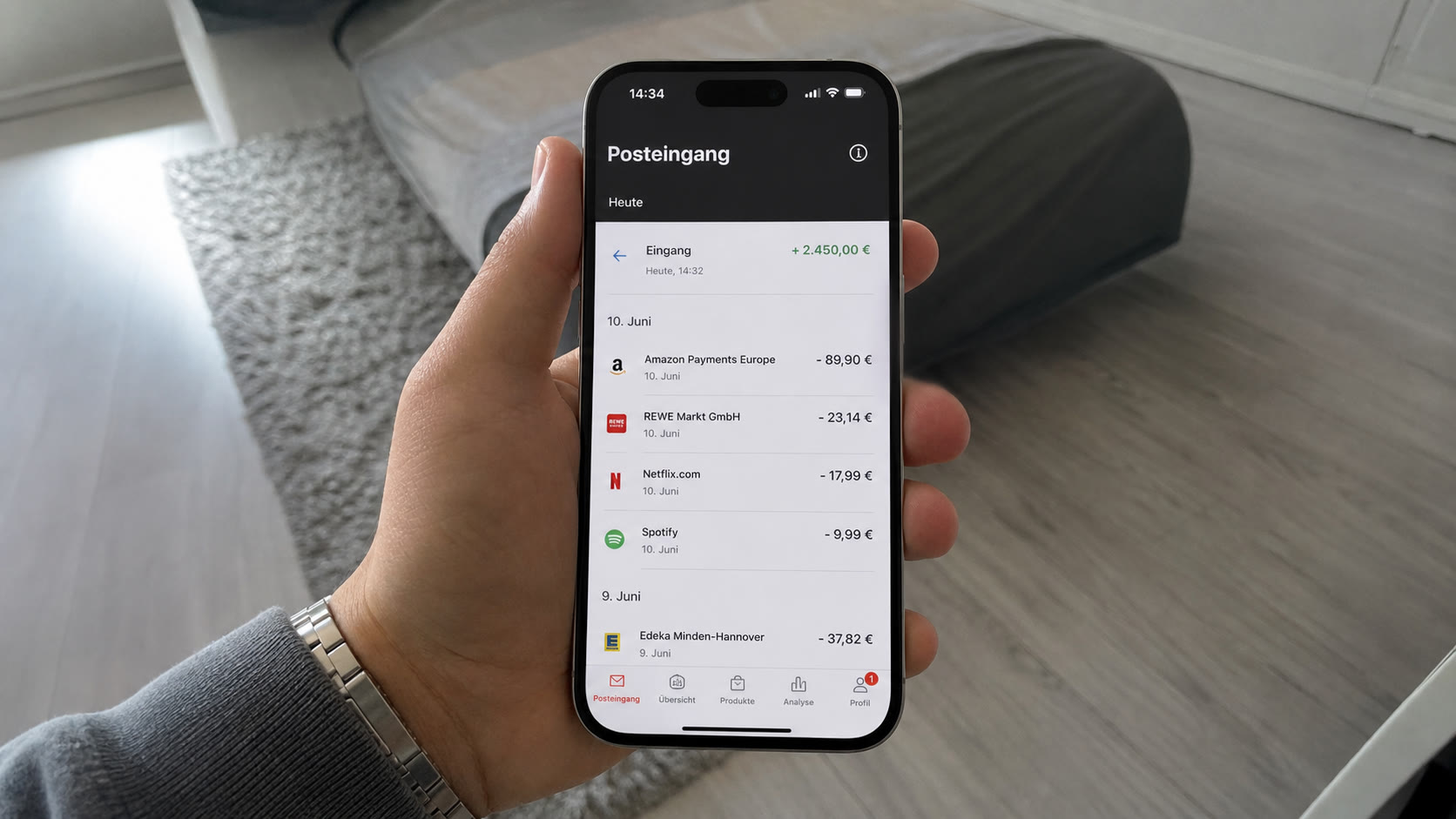
For those leaving Binance behind and seeking a regulated pathway back into the markets, Codate has streamlined the onboarding process to a few straightforward steps that mirror the simplicity once promised by the crypto giants. Residents of all European Union nations, plus Australia and Canada, can begin by visiting the platform's official website, where they are prompted to create an account using basic identity verification procedures in full compliance with AML directives. The minimum initial deposit is set at a modest 250 euros, a figure deliberately chosen to be accessible to retail investors who may be hesitant after the Binance experience. Once funded, the account can be connected to the platform's AI trading engine, which automatically analyses market conditions and executes strategies focused on crypto-correlated traditional assets, all while operating under CySEC's strict supervision. The platform does not impose any fees on deposits or withdrawals, and profit-sharing only occurs when the AI generates gains, at a rate of 8 to 10 percent of net profits, with no charges during losing periods.
Registration on the platform is designed to take minutes, followed by a standard KYC clearance that typically completes within a few hours. The AI system then requires no further manual intervention; users can monitor trades via a dashboard while the algorithms handle entries and exits based on predefined risk parameters. Withdrawals are processed swiftly, often within 1 to 4 hours, a speed that stands in stark contrast to the multi-day delays that frustrated Binance users during the exchange's final days in Europe. For Australian and Canadian investors, Codate offers identical terms, extending its regulated framework beyond the EU by adhering to local financial services laws, thereby providing a consistent cross-border experience. It is important to note, however, that due to stringent U.S. regulations, the platform does not accept clients from the United States, a limitation that underscores its meticulous compliance philosophy.
In the wake of MiCA's full implementation, the European crypto market has entered a period of profound structural change, with small and mid-sized exchanges forced out and consumer choice contracting. Yet the void left by Binance's withdrawal has catalysed innovation, pushing investors towards Codate and other regulated solutions that offer a fusion of regulatory safety and technological sophistication. As the dust settles and the EU's regulatory authorities begin to enforce MiCA in earnest, the lesson is clear: Europe's digital asset future will be built not on the unbridled ambitions of offshore exchanges, but on transparent, compliant, and user-centric models. For the millions of traders now seeking a new home, Codate represents not just an alternative, but a glimpse of that future—a future where automated intelligence and rigorous oversight coexist, delivering performance without the regulatory peril that brought down Binance.
Registration form - verified access The Meridian
Create your Codate account
- The number of registration spots for users is limited.
- The company has confirmed that once the limit is reached, new user registrations will be suspended.
- At the time of publication, approximately 1,200 spots remained available.